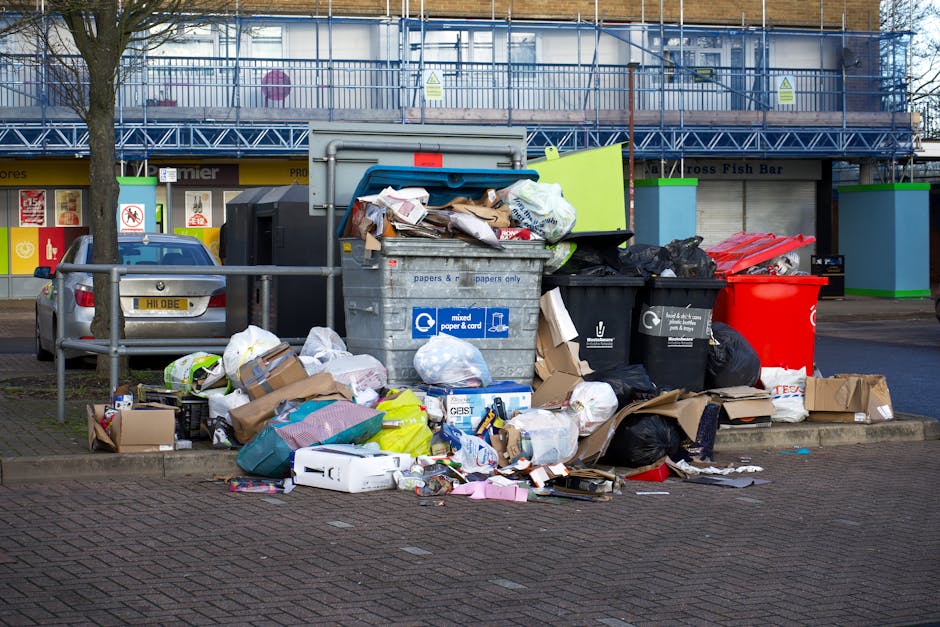
Avoid hidden fees in Elephant and Castle rubbish quotes
Posted on 06/08/2026

If you have ever asked for a rubbish removal price and then watched it quietly grow, you are not alone. Hidden fees can turn a straightforward job into a frustrating one very quickly, especially in Elephant and Castle where access, parking, stairs, and same-day timing can all affect the final bill. The good news? You can spot most of the traps before you agree to anything. This guide shows you how to avoid hidden fees in Elephant and Castle rubbish quotes, what a proper quote should include, and the exact questions worth asking before anyone turns up with a van.
Whether you are clearing a flat near the station, emptying a loft, or dealing with a pile of builders' waste after a small renovation, the same principle applies: if the quote is clear, the job is usually calmer, cheaper, and easier to manage. Let's make the process feel a lot less annoying.
Why Avoid hidden fees in Elephant and Castle rubbish quotes Matters
A rubbish quote is supposed to give you confidence, not suspense. In practice, hidden fees usually appear when the provider leaves room for "extras" that were never clearly explained at the start. That might be a load size adjustment, a charge for carrying items down stairs, a congestion-related add-on, or a fee for certain waste types. None of those things are surprising on their own. The problem is when they are not disclosed until the last minute.
In Elephant and Castle, this matters more than people expect. Many properties have tight access, controlled entry, shared hallways, lift restrictions, or awkward loading points. That does not mean you should pay more automatically. It means the quote needs to reflect the real job, not a vague assumption. If a company gives a low headline price and later adds small charges one by one, the final amount can feel oddly inflated. Truth be told, that is where trust disappears.
A clear quote also helps you compare services properly. One company may look more expensive at first glance, but if it includes labour, waste transfer, and disposal within the stated price, it could be better value than a cheap quote with lots of fine print. This is why people looking at straightforward pricing and quote information tend to make better decisions. Transparency saves time, money, and a bit of stress too.
If you are weighing up rubbish removal alongside other local planning decisions, such as moving, renting out, or renovating, it helps to keep the bigger picture in mind. Articles like a local's perspective on living in Elephant and Castle and property investment in Elephant and Castle show how often access, timing, and building rules shape everyday costs in the area.
Expert summary: The best way to avoid hidden fees is simple: describe the job accurately, ask what is included, and get clarity on access, waste type, labour time, and disposal before booking. If anything sounds fuzzy, it probably needs another question.
How Avoid hidden fees in Elephant and Castle rubbish quotes Works
Most rubbish removal quotes are built from a few moving parts. Once you understand those parts, the whole thing becomes much easier to judge. A proper quote usually considers the amount of waste, the type of waste, how easy it is to collect, where the property is located, whether the team needs extra labour, and how quickly the work needs to happen.
Here is the practical version. You describe what needs removing. The company estimates the volume or weight, checks the likely disposal route, considers the access conditions, and then gives you a price. If the quote is honest and detailed, it should already include the main costs. If it is vague, it may only be the starting point.
There are a few common fee triggers to watch for:
- Access issues such as stairs, no lift, narrow corridors, or long carries from the property to the vehicle.
- Extra waste volume if the load is larger than described or photographs were incomplete.
- Special waste including items that need careful handling or separate processing.
- Waiting time if the team cannot start unloading straight away because keys, parking, or entry are delayed.
- Parking or loading complications where a van cannot stop close enough to the property.
- Out-of-hours or same-day requests if an urgent slot changes the normal schedule.
That is not automatically a red flag. In fact, some charges are completely reasonable if they are disclosed in advance. The key is predictability. If you are getting a quote for a flat clearance near Walworth Road, for example, the provider should ask the right questions before arriving. A well-run local service will do that. If they do not, that is your cue to pause.
You can also learn a lot from the way a company explains its services. A strong services overview usually shows whether they understand different job types, from furniture disposal to builders' waste, and whether they are likely to quote carefully or just guess.
Key Benefits and Practical Advantages
When you avoid hidden fees in rubbish quotes, you do more than save money. You also make the whole collection process more reliable. A clear price makes it easier to plan, easier to compare, and easier to book without second-guessing every line item.
- Better budgeting: you know the likely final cost before the team arrives.
- Fewer disputes: everyone is working from the same understanding.
- Faster decisions: clear quotes make comparison easier.
- Less disruption: no awkward argument at the door over an unexpected extra charge.
- More suitable service: the provider can match the quote to the actual job.
There is also a quieter benefit: confidence. People often hold off booking waste removal because they worry the price will balloon. Once you know how to check the quote properly, you stop overthinking it. And honestly, that relief matters. A messy hallway or a cluttered garage is irritating enough without financial guesswork on top.
If your job involves furniture, heavy items, or mixed waste, a detailed quote becomes even more valuable. Pages like furniture disposal in Elephant and Castle and junk removal in Elephant and Castle are helpful examples of how different waste types can affect the way a quote should be structured.
Who This Is For and When It Makes Sense
This topic matters to almost anyone arranging a clearance, but some people need it more than others.
Homeowners and tenants often deal with old furniture, bagged rubbish, broken appliances, or post-move leftovers. In a typical flat move, it is easy to underestimate how much there is until the piles are all together. Then the quote changes. Not ideal.
Landlords and property managers need certainty because turnaround times are tight. If a flat needs to be cleared between tenancies, there is rarely room for surprise costs or a second visit.
Businesses and offices care about clean pricing because waste removal may be part of a broader move, refurbishment, or end-of-lease handover. You will usually want the invoice to line up neatly with internal budgets.
Builders and renovators face another layer of complexity. Materials can vary a lot, and some loads are heavier than they first look. If you are booking builders' waste clearance in Elephant and Castle, a quote should reflect rubble, timber, plasterboard, or mixed load handling rather than a generic rubbish collection price.
People needing urgent help should be extra careful. Same-day bookings can be perfectly reasonable, but they are also where rushed conversations happen. If you are reading this because you need a rapid pickup, it is worth checking same-day rubbish removal quotes in SE17 before saying yes to the first number you hear.
It also makes sense to be cautious if your property has unusual access. Flats with lift restrictions, shared entrances, or limited loading space often need more detailed quoting. A practical local example is the kind of access challenge discussed in this guide to Heygate Estate access problems.
Step-by-Step Guidance
If you want to avoid hidden fees in Elephant and Castle rubbish quotes, the process is not complicated. It just needs a bit of discipline. Here is the step-by-step approach I would use myself.
- List exactly what needs removing. Don't just say "a bit of rubbish." Break it down: bags, furniture, appliances, garden waste, boxes, builders' debris, or mixed items.
- Take clear photos from more than one angle. A single picture can be misleading. Show the full pile, nearby stairs, the hallway, and the exit route if possible.
- Explain access details upfront. Mention lifts, floor level, narrow corridors, parking limits, codes, gated entry, or time windows for loading.
- Ask what the price includes. Labour, loading, transport, disposal, and any environmental charges should be clear. If something is excluded, ask why.
- Confirm how the quote may change. What happens if the load is slightly bigger? What happens if items are heavier than expected? Get the answer before booking.
- Ask for the quote in writing. A written message or email reduces memory drift. People forget details. It happens.
- Check timing and arrival terms. Make sure the booking window, waiting time, and cancellation terms are clear.
- Review the final price before the team starts. If the collection crew needs to adjust the price on arrival, ask them to explain the difference clearly and calmly.
That last step matters more than people think. The best time to question a price is before the lifting starts, not after the van is half full and everyone is already sweaty. Been there, seen that, not fun.
Expert Tips for Better Results
A few small habits make a big difference. These are the things that tend to separate a smooth collection from a messy one.
Be specific about the waste mix. Mixed waste can cost differently from a single-type load. If you have mostly furniture with a few bags of rubbish, say so. If there are mattress, plasterboard, or electrical items involved, mention that too.
Ask whether the quote is fixed or estimated. Those are not the same thing. A fixed quote is usually more useful if the description is accurate. An estimate can shift if the job changes.
Check whether parking is included or your responsibility. In London, that detail can easily get overlooked. Sometimes the fee is built in; sometimes it is not. Ask directly.
Look at the wording, not just the number. "From GBPX" means something very different from "all-inclusive price." The phrase matters. A lot.
Make sure the company understands your area. Elephant and Castle has a mix of towers, estates, side streets, and busy main roads. Local familiarity can reduce surprises. If a provider knows the area well, they are usually better at quoting honestly.
Use the service that fits the job. A small amount of household clutter may suit a collection service, while a larger renovation job may fit better with a different waste solution. Comparing options such as rubbish collection in Elephant and Castle, waste removal, and skip hire can help you choose the right pricing model for the size of the job.
One more thing: if the quote sounds too neat, be curious. Not suspicious, just curious. There is a difference.

Common Mistakes to Avoid
Most people do not get caught out because they are careless. They get caught out because they are busy. Fair enough. But a few common mistakes keep showing up.
- Giving vague descriptions and expecting the quote to stay accurate.
- Forgetting stairs or access restrictions until the team arrives.
- Assuming all waste types cost the same when they often do not.
- Only comparing the headline price instead of the full terms.
- Not asking about disposal charges or whether they are already included.
- Ignoring time-based fees for urgent or out-of-hours collections.
- Leaving it until the last minute and then accepting whatever quote appears first.
A common one in Elephant and Castle is underestimating access costs in blocks and estates. If you have ever carried a sofa down two tight turns and across a shared courtyard on a wet afternoon, you already know why providers ask so many questions. The job is simple in theory, a bit less simple in real life.
Another mistake is treating every quote as if it should be identical. It should not. Different providers structure charges differently. The aim is not to find the cheapest-looking number. The aim is to find the clearest total cost for the exact job you need done.
Tools, Resources and Recommendations
You do not need fancy software to avoid hidden charges. A few simple tools are enough.
- Phone photos or video: capture the waste, the route out, and any access constraints.
- A notes app: keep a short list of what is included in the quote and what is not.
- Measurements: rough sizes of large items can help prevent load estimates from drifting.
- Calendar reminders: useful for same-day bookings or tight move-out schedules.
- Written confirmation: a message or email with the agreed scope is often worth its weight in peace of mind.
For local readers, it can also help to use related site guidance to understand the wider service landscape. The recycling and sustainability guidance is useful if you care about where waste goes after collection, while insurance and safety information is worth checking if your job involves heavy lifting, awkward access, or valuable property nearby.
If you are trying to decide who to trust, the company's general information pages can also tell you quite a bit. A clear about us page, transparent terms and conditions, and sensible payment and security details all suggest a more organised operation. Not glamorous, maybe, but very useful.
Law, Compliance, Standards and Best Practice
Rubbish removal is not just a price question. There are also compliance and duty-of-care issues in the background. In the UK, waste should be handled by appropriate carriers and taken to suitable disposal or recycling routes. As a customer, you do not need to become a legal expert, but it is sensible to deal with providers who can explain what happens to the waste and who follow normal professional practice.
A few plain-English points help here:
- Duty of care: waste should be passed to a legitimate operator, not dumped casually or handled in a way that puts you at risk.
- Transparent pricing: good practice means the customer knows what they are paying for before work starts.
- Clear terms: if there are access charges, waiting fees, or special handling costs, these should be explained in advance.
- Safe collection methods: lifting, loading, and transport should be managed without unnecessary risk to people or property.
It is also sensible to avoid providers who sound evasive about what happens next. If they cannot explain their process in simple terms, that is not reassuring. In contrast, services that are open about their approach tend to make the quoting process much easier to trust.
If you want to understand the wider local rules around disposal and what residents typically need to watch for, the article on Southwark Council rules for rubbish disposal in SE17 is a useful companion read. It helps frame what is normal, what is not, and why some quotes are structured the way they are.
Options, Methods, or Comparison Table
Different rubbish removal options suit different jobs. If you choose the wrong one, you may end up paying for capacity you do not need or missing charges that were never clearly explained. This table gives a practical comparison.
| Option | Best for | Pricing style | Hidden-fee risk | What to check |
|---|---|---|---|---|
| Man-and-van style collection | Small to medium household clearances | Usually based on volume, labour, and access | Medium if access is not explained | Stairs, parking, item mix, and disposal inclusion |
| Full rubbish clearance | Mixed loads and fuller rooms | Often more detailed and job-specific | Lower when scope is clear | What counts as a full load and what is excluded |
| Skip hire | Longer projects and ongoing DIY work | Based on skip size and hire period | Medium if permits or overfilling apply | Placement, permit needs, and hire duration |
| Specialist waste removal | Builders' waste, bulky furniture, or mixed specialist loads | Usually quoted with more detail | Lower if the waste type is declared properly | Material type, handling requirements, and loading access |
For a lot of households, a tailored collection service is the simplest route. For a larger renovation, skip hire can make more sense. The main thing is not to force one model onto a job that does not suit it. That is where cost surprises creep in.
Case Study or Real-World Example
Imagine a tenant leaving a two-bedroom flat in SE17. They have a broken wardrobe, a mattress, several bin bags, a dismantled desk, and a few bits of packaging from a recent move. On the phone, they say it is "just a small amount of rubbish." Reasonably enough, they want a quick price.
A careful provider asks for photos, confirms there are three flights of stairs, checks whether parking is available outside, and clarifies that the mattress and wardrobe will need proper loading time. The final quote is slightly higher than the initial rough guess, but it is explained clearly and includes labour and disposal. There is no awkward surprise on the day because the scope was described properly.
Now compare that with a rushed version of the same job. The customer sends one blurry photo, forgets to mention the stairs, and does not say there is no direct loading point. The van arrives, the team sees the real access situation, and the price changes. Nobody enjoys that conversation, especially when everyone is trying to move fast and the hallway smells faintly of old cardboard and dust.
The lesson is not that quotes should be perfect. They rarely are on the first attempt. The lesson is that clarity at the start keeps the whole experience calmer. A company that asks detailed questions is usually trying to avoid problems later, not create them.
Practical Checklist
Use this checklist before you book anything.
- Have I described every item or waste type clearly?
- Have I sent photos that show the full job, not just part of it?
- Have I explained stairs, lifts, parking, entry codes, and loading access?
- Do I know whether the quote is fixed or estimated?
- Have I asked what is included in the price?
- Have I asked what could cause the price to change?
- Do I know whether there are waiting, access, or same-day charges?
- Have I confirmed the booking in writing?
- Do I understand the cancellation or rescheduling terms?
- Have I checked whether the service is suitable for my type of waste?
If you can tick off most of those points, you are already ahead of the game. Seriously. Most hidden fee problems start when one of those boxes gets skipped.
Get a free quote today and see how much you can save.
Conclusion
To avoid hidden fees in Elephant and Castle rubbish quotes, focus on clarity rather than speed. Describe the job properly, ask direct questions, and make sure the quote is tied to the real conditions at your property. That is especially important in a busy part of London where access, parking, and building layout can shape the final price.
The best quote is not always the lowest one at first glance. It is the one that tells you what you are paying for, why the cost is what it is, and what would change it. Once you know how to read the small print and ask the right questions, you can book with more confidence and less stress.
If you are dealing with a clearance, a flat move-out, builders' debris, or a bigger household job, take ten minutes to get the details right. It can save you far more than ten minutes later. And that, to be fair, is usually worth it.
A calm, transparent quote is a small thing, but it makes the whole job feel much lighter.